Deceptive PatternsExposing Deceptive Patterns in User Interfaces
Alongside Dr. Harry Brignull, I designed and built the site to bring his book, examples library, and his decade of work into one place online. Deceptive Patterns is a comprehensive resource exposing and educating about deceptive patterns in user interfaces.

A single home for the field of deceptive patterns
Book, examples, and legal cases in one place
Dr Harry Brignull coined the term deceptive patterns in 2010 and has spent more than a decade documenting them.
By 2023 he had a book, a category that had become law in several jurisdictions, and an old website struggling to keep up. The job was to bring all of that into one place.
The site needed to do three things at once: give people a clear introduction to deceptive patterns, host the full text of his book in a way that felt native to the web, and keep a growing library of real-world examples and legal cases up to date without manual effort.
The build runs on Webflow with Airtable as the content backend, synced through Whalesync.
-
Website Development: Utilized Webflow to design and build a responsive and user-friendly website, ensuring seamless navigation and accessibility across devices.
-
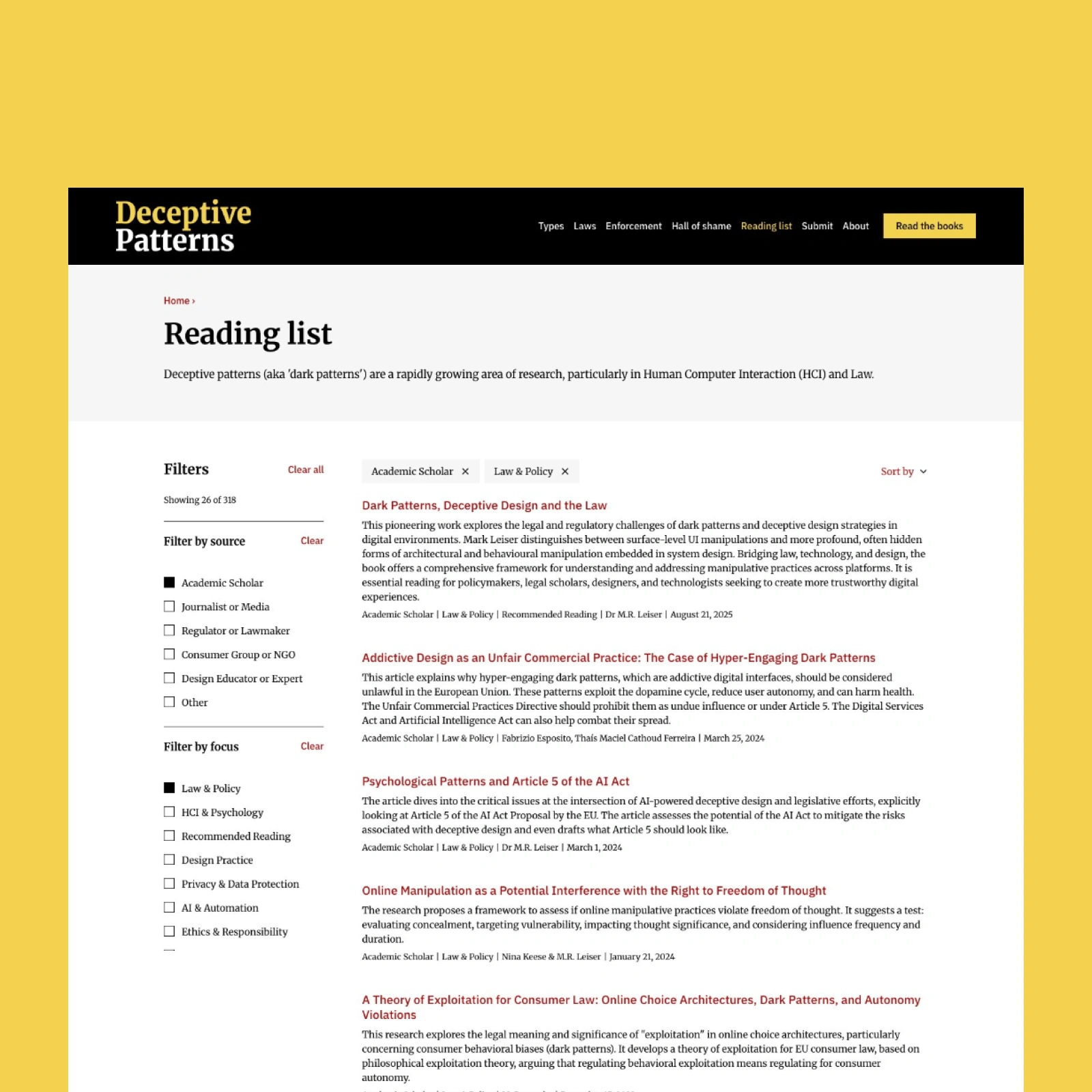
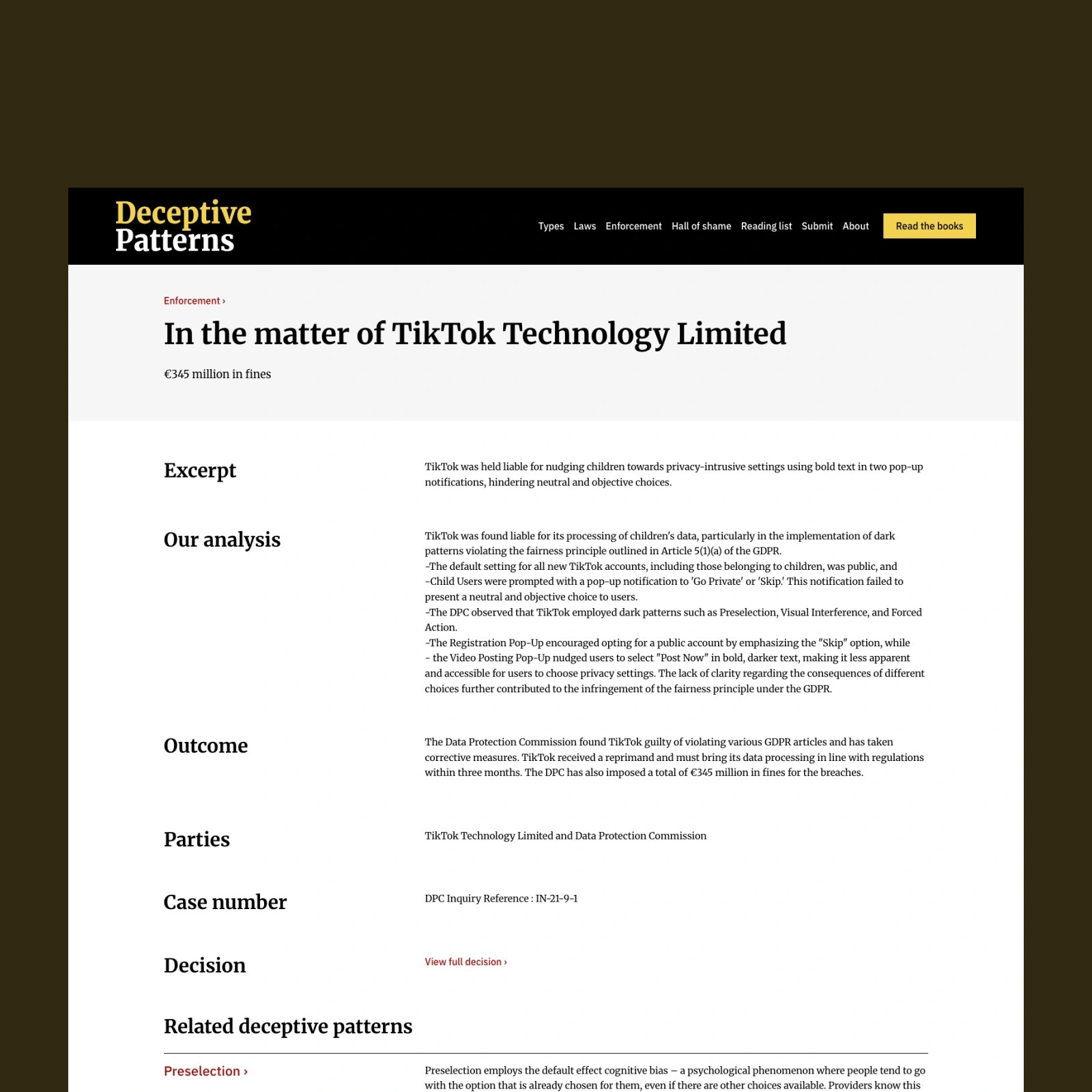
Data Integration: Integrated data from Airtable to dynamically manage and display a curated collection of deceptive design examples, legal cases, and related resources.
-
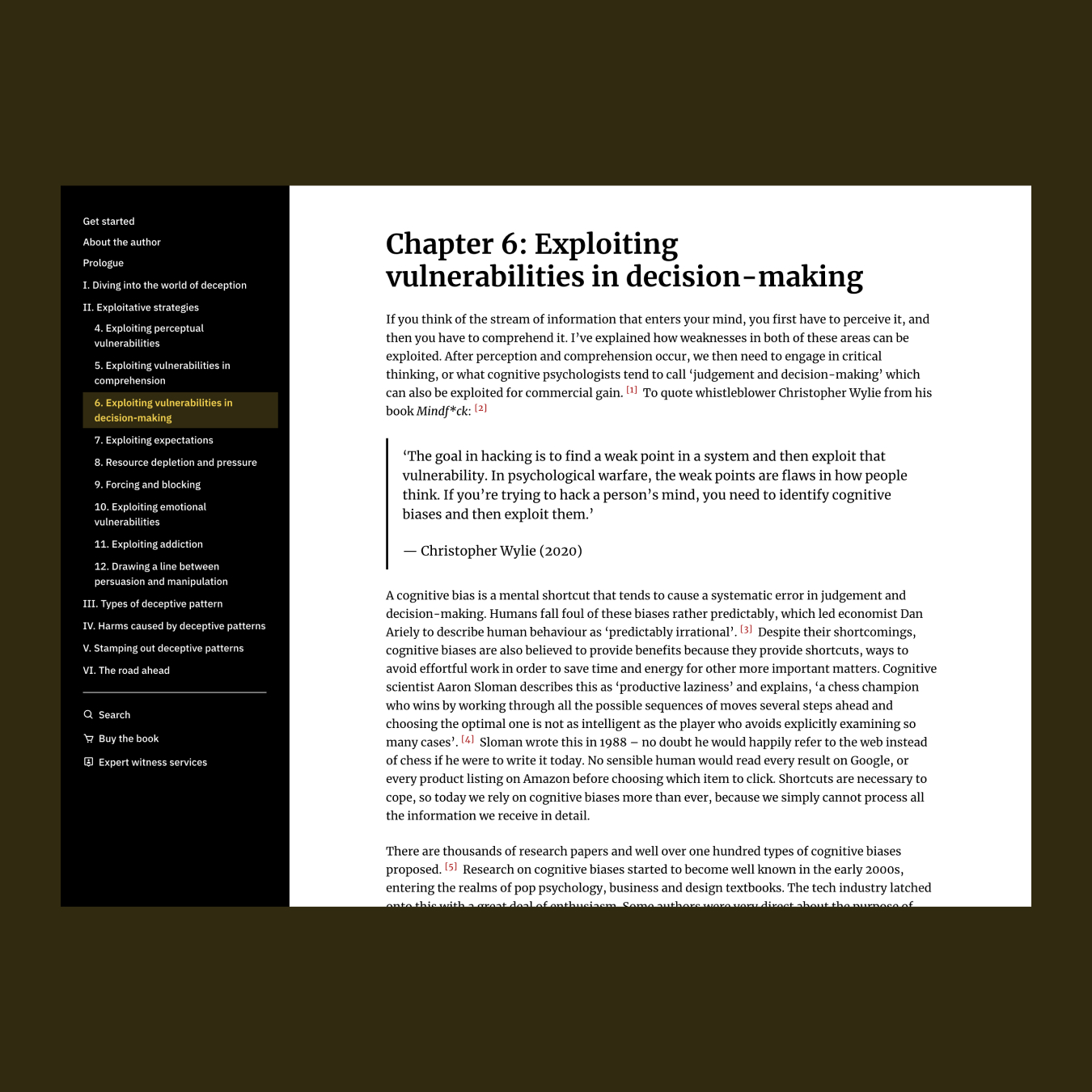
Content Conversion: Translated the comprehensive book on deceptive patterns into an HTML format, making it easily accessible and searchable for users directly on the site.
Everything linked to everything else
A single source of truth for patterns, laws, and the cases they show up in
The site runs on Webflow with Airtable as the content backend. Every deceptive pattern type, every regulation, and every real-world case lives in its own structured record, and they all cross-reference each other. Update one thing in Airtable and it flows through to the live site, with all the related links still intact.
From EPUB to a searchable web book
A table of contents, deep links, and search across every chapter
The book existed as an EPUB, which got us part of the way. The rest was wrangling: cleaning up the export, structuring it as Webflow CMS entries, and wiring up internal linking and search so readers could move between chapters as easily as they would on any other site.
A field with real consequences
The site sits at the centre of a growing body of research, regulation, and case law
800+
Real-world examples in the hall of shame
15+
Years documenting deceptive design, since 2010
30+
Chapters of the book, fully searchable on the web
For more information about Deceptive Patterns, visit the official website.